Rural broadband in northern Pennsylvania: who’s still waiting — and why 2025 hasn’t delivered universal access yet
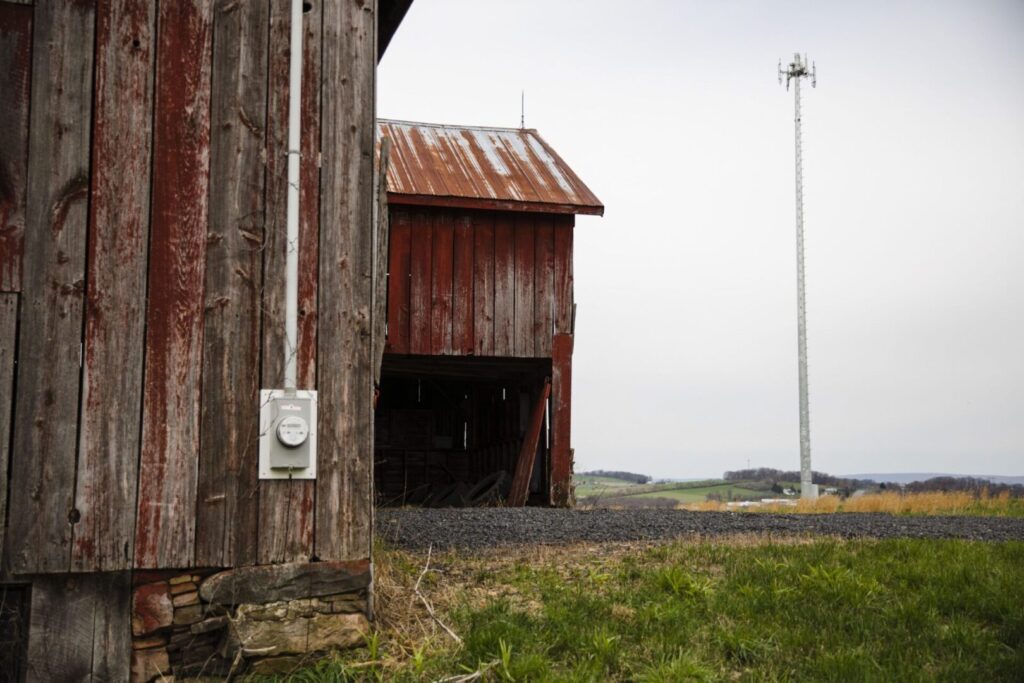
For rural residents in northern Pennsylvania, the promise of high-speed internet has felt both urgent and elusive. Plans funded by a wave of federal dollars are now being deployed across the state, but many towns in Potter, McKean, and Tioga counties still struggle with unreliable or effectively nonexistent broadband service — affecting education, telemedicine, small businesses, and daily life.
Though the state has secured more than $1.16 billion in federal Broadband Equity, Access, and Deployment (BEAD) funding meant to close the “digital divide,” the rollout has been slower and more contested than many residents expected. broadband.pa.gov
The funding story: big money, slow rollout
The BEAD program — part of a $42.45 billion national broadband initiative created by the Infrastructure Investment and Jobs Act — was designed to bring high-speed internet to every American home and business, regardless of how remote. Wikipedia
Pennsylvania’s allocation, administered by the Pennsylvania Broadband Development Authority (PBDA), aims to extend broadband to unserved and underserved households. Officials announced provisional grants totaling roughly $793 million in 2025, with technology mixes including fiber, fixed wireless, and satellite services earmarked for different areas. Brander Group
The state’s plan would bring fiber to about two-thirds of eligible locations, with about 14 % designated for fixed wireless connections and another share slated for satellite coverage. Broadband Breakfast
But that high-level progress doesn’t yet translate to universal access on the ground in every small community.
A patchwork of coverage — unserved census blocks are still real
Public statewide broadband maps indicate that while many towns are slated for upgrades, persistent gaps remain, especially in very low-density areas. Because BEAD eligibility is determined by federal and state mapping data — which often categorizes entire census blocks as “served” if any provider claims service — many truly unserved or underserviced households can be overlooked on paper.
Independent analysts have found that reported broadband coverage frequently overstates actual availability, especially in rural states, because provider filings may not reflect real-world speeds or presence on every road. arXiv
In parts of Potter and Tioga counties, residents still contend with home internet plans that struggle to deliver reliable video conferencing or basic business functions. Community leaders say official maps can give the mistaken impression that service is available when it isn’t reliable or affordable.
Fixed wireless versus fiber: promises and trade-offs
One of the core debates in rural broadband today in Pennsylvania revolves around technology choice:
- Fiber-optic connections — the fastest and most future-proof technology — require significant investment in infrastructure, and are often slowest to reach remote valleys and hilltops.
- Fixed wireless systems — which connect homes via radio transmissions from nearby towers — can be deployed faster and at lower cost, but may offer lower speeds and be more sensitive to terrain and tree cover.
- Satellite services (including low-earth-orbit systems from companies like SpaceX and Amazon), are now part of Pennsylvania’s broadband strategy under more flexible federal rules, but critics note that satellite tends to be more expensive and less consistent than ground-based broadband. Spotlight PA
Federal officials and state agencies say these varied technologies are ways to reach more people quickly, especially where laying fiber would take years and a large workforce. Local critics counter that too much reliance on satellites and wireless could leave rural households with slower, less reliable service than urban neighbors.
Where northern PA stands now
In the northern tier, broadband improvements are happening unevenly:
- Tioga County has areas where fixed wireless and new fiber projects are moving forward, often supported by local public-private partnerships or electric cooperatives seeking to build beyond their existing lines.
- McKean County includes small pockets where some residents report newly available high-speed options, but others on the outskirts still rely on legacy DSL or mobile hotspot connections that struggle in bad weather.
- Potter County sees some broadband expansion near borough centers, but outlying townships remain lightly served — if at all.
State officials stress that these variations are part of a phased buildout and that federal grant requirements demand accountability and long-term performance testing before funds are fully disbursed.
Voices from the field
(Name changed for privacy), a lifelong resident of a remote Potter County township, describes trying to run a home business without dependable broadband. “I can get signal that shows as ‘high speed’ on the map,” they said, “but when I try to upload files or do video calls, it drops every few minutes. It feels like the map says we’re served, but we’re just not.”
Local small business owners echo similar frustrations, saying that students trying to attend remote courses struggle with dropped streams and that telehealth appointments often lag or fail altogether.
On the provider side, a spokesperson for a regional ISP explained that rural deployment is costly because of low population density and challenging terrain. They said that while fixed wireless solutions can bring service sooner, they continue to pursue fiber builds where feasible, especially in clustered town centers, and work with state grant programs to reduce upfront costs.
What’s next — timing and expectations
Under current BEAD guidelines, companies that receive funding must deliver service within four years of award. That gives Pennsylvania until late 2029 to make good on the promise of universal coverage in funded areas.
In the meantime, local governments, school districts, and community groups are pushing for:
- More granular, address-level mapping to ensure truly unserved homes aren’t bypassed.
- Affordability programs to complement infrastructure deployment.
- Regular service verification rather than accepting provider self-reports at face value.
These suggestions mirror broader national and state discussions about how to make broadband expansion both efficient and equitable.
The human side of broadband
In rural Pennsylvania, high-speed internet is no longer a luxury. It’s a gateway to education, healthcare, employment, and civic participation. As federal and state programs continue to roll out through 2025 and beyond, the challenge for communities in the northern tier will be bridging the gap between paper promises and real connections that work for everyday life.
Until that happens, many residents remain in a waiting room filled with anticipation — and the sound of buffers and dropped signals.